
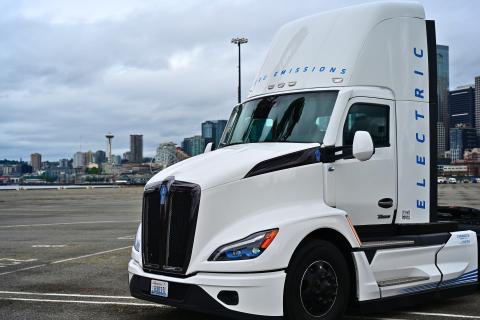
The NWSA’s Clean Truck Program is working to facilitate a just and equitable transition to zero-emission (ZE) drayage trucks by 2050 or sooner – as called for in the recently adopted NWSA 2026-2030 Clean Air Implementation Plan. Our strategy has two components: the ZE Drayage Truck Incentive Program and the Decarbonizing Drayage Roadmap, being implemented by the NWSA-led Puget Sound ZE Truck Collaborative.
Responding to industry trends, green supply chain initiatives, and state incentive programs like the Washington State Zero-Emission Incentive Program (WAZIP), truck manufacturers are ramping up their manufacturing and marketing of ZE trucks in our state. There is a growing awareness of the need for ZE truck charging and fueling infrastructure, and several local utilities and fuel providers are exploring investments. An increasing number of retailers are committing to decarbonize their supply chains, and funding opportunities are on the rise. At the same time, there are significant challenges to be overcome, including the current lack of ZE trucks and charging infrastructure in our region, high costs, and equity considerations. The NWSA’s role in this transition is one of “facilitative leadership”: working with stakeholders to facilitate a transition that is just and equitable, while reducing or eliminating the potential for the transition to be chaotic, painful, or unfair.
What are Zero-Emission Trucks?
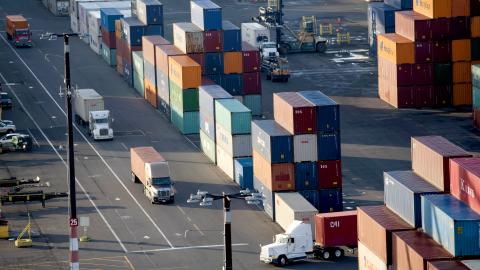
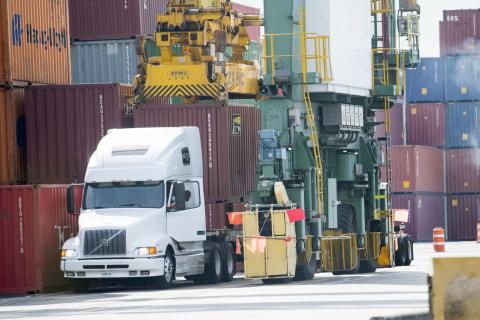
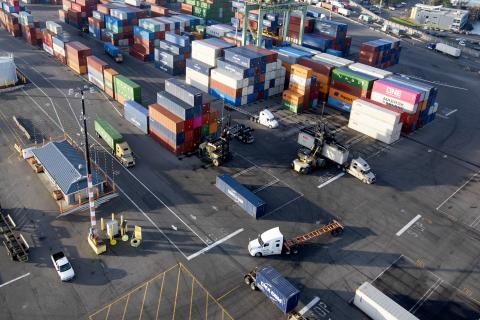
There are currently around 5,000 Class 8 trucks serving marine cargo terminals in Seattle and Tacoma, almost all of them using diesel.
Zero-emission versions of these diesel trucks include both battery electric vehicles (BEVs) and hydrogen fuel cell electric vehicles (FCEVs). Each technology has unique strengths, limitations and infrastructure needs.
The transition to ZE trucks is a necessary step to reduce air pollution, greenhouse gases, and environmental health disparities associated with diesel vehicles at ports - as well as a significant challenge.
Types of Zero-Emission Trucks
Battery electric trucks
Battery electric trucks are powered by electricity stored in large onboard batteries that are recharged using electrical charging infrastructure. A battery electric truck can currently expect to drive a range of 120-250 miles on a full charge, depending on battery size and route.
However, a battery adds substantial weight to the vehicle, requires reliable overnight or fast opportunity charging, and is significantly more expensive than a traditional diesel truck.
Hydrogen fuel cell trucks
Hydrogen FCEVs use hydrogen fuel cells to generate electricity onboard, and are particularly suitable for longer routes, high-payload operations, and/or where quick refueling is valuable.
FCEVs generally offer extended ranges of 300-500 miles per fueling, with lighter fuel tanks compared to BEV battery packs offering similar range. Current hydrogen supplies are not low-GHG, but low-carbon hydrogen may become increasingly available due to substantial investment and innovation in the region (e.g., through the Pacific Northwest Hydrogen Hub). Currently, green hydrogen - produced by the electrolysis of water, using renewable electricity - is significantly more expensive than electricity or diesel.
Puget Sound Zero-Emission Truck Collaborative
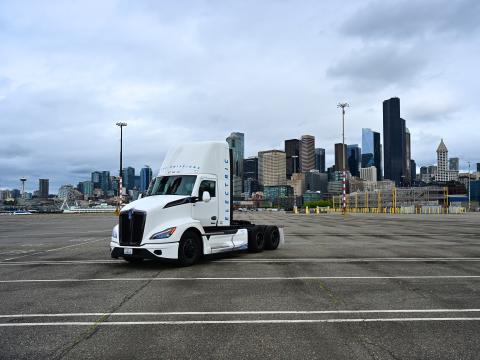
The transition to zero-emission drayage trucking at NWSA terminals needs to be part of a broader regional, state-wide, and national transition to be successful.
The Puget Sound Zero-Emission Truck Collaborative was founded in 2023 with funding support from the Washington State Department of Transportation and the NWSA. Led by a third-party facilitator and technical team, more than 25 members representing the freight industry, community groups, tribes, utilities and truck drivers met regularly to analyze key issues and understand what is needed to ensure an equitable and effective transition to ZE drayage trucks at ports. This comprehensive and collaborative approach culminated in the Decarbonizing Roadmap to 2050, which includes nearly 70 recommendations aimed at making ZE trucks more available and affordable, building out the necessary charging and fueling infrastructure, and supporting the drayage trucking community through what will be a challenging transition.
Key recommendations include expanding financial incentives to bring ZEVs into cost parity with diesel, ensuring the availability of maintenance and services for new technologies, and developing publicly accessible charging and hydrogen fueling infrastructure.
The Collaborative continues to meet to support and guide implementation of the Roadmap's recommendations.
Zero-Emission Drayage Incentive Program (ZEDIP)
It is essential we get ZE trucks into operations in our gateway as soon as possible, for several reasons: to bolster confidence in, and support for, these new technologies; to get initial charging and fueling infrastructure in place; to stimulate the local ZE truck industry, market, and workforce; and to gather data and garner lessons learned that can inform our longer-term strategy and solutions at-scale.
ZE trucks are expensive, and the associated charging or fueling infrastructure is complex and resource-intensive. The goal of the ZEDIP is to secure state and federal funding to leverage additional investments from public and private partners (e.g., charging and fueling infrastructure developers, retailers, trucking companies, utilities, etc.) to catalyze initial deployments of ZE drayage truck in the NWSA gateway.
The NWSA launched the first phase of this program in 2025 with $6.24 million in support from Washington State Climate Commitment Act funding. The first deployment project will be led by Zeem Solutions, who is partnering with six local drayage fleet partners to collectively bring 19 zero-emission trucks to the Puget Sound region. The ZEEM project also includes building out a charging site located in SeaTac that will enable 250 vehicles to charge per day, with parking capacity for 70 vehicles overnight. The first zero-emission trucks are expected to hit the road in 2027. Future rounds of incentive funding will be announced as they become available.