
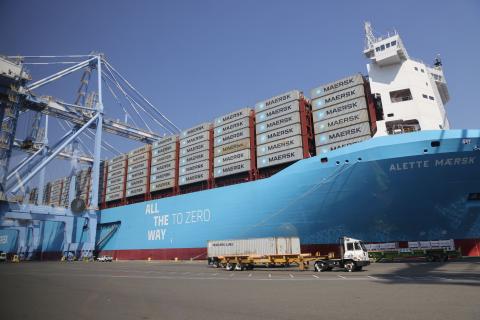
Through our Clean Air Program, The Northwest Seaport Alliance works closely with our customers, marine terminal operators, trucking companies, rail lines and other stakeholders to reduce air and climate pollution from seaport activities such as containers ships, cargo-handling equipment and drayage trucks.
About 90% of the seaport-related diesel particulate matter and greenhouse gases in the Seattle-Tacoma airshed are associated with cargo shipping operations that the NWSA manages on behalf of the ports of Seattle and Tacoma. The NWSA’s strategy for reducing and ultimately eliminating these emissions is two-pronged: continue and strengthen our work to reduce emissions from existing fleets of mostly diesel-powered vessels, vehicles, and equipment; and, at the same time, facilitate and accelerate the transition to zero-emission fuels and technologies, including the development of the necessary fueling and charging infrastructure.
We are committed to doing our part to deliver cleaner, healthier air for the people who work in and live near our gateway -- and to reduce the environmental health disparities that exist in communities adjacent to our terminals in both Seattle and Tacoma.
Specific Activities
- Leading the development and implementation of the Northwest Ports Clean Air Strategy, which lays out the overarching vision and goals for the NWSA’s clean air and climate actions and investments.
- Working with our drayage truck community to accelerate the transition to zero-emission drayage trucking through our Zero-Emission Truck Program and implement diesel emission reductions through our long-standing Clean Truck Program.
- Leading the shore power program investments with the goal of installing shore power technology at all major container terminals by 2030. Our investments also include the infrastructure required for ships to plug in and turn off diesel engines while at berth.
- Collaborating with our marine terminal operators to identify and pursue opportunities to reduce pollution, such as switching to cleaner cargo-handling equipment.
- Participating in the PNW Hydrogen Hub to explore opportunities for using clean hydrogen to reduce seaport-related emissions from drayage trucks, cargo-handling equipment and other sources.
- Partnering with international port authorities and industry leaders to accelerate the deployment of e-methanol fueled vessels to our gateway through our US-Korea Green Shipping Corridors projects and related efforts.
- Identifying and securing external funding to help finance a range of clean air and climate solutions. In recent years, the team has worked to secure nearly $100 million in state and federal grants to fund truck “scrap and replace” programs, launch a zero-emission drayage incentive program, finance shore power installations and incentivize marine terminal operators to purchase cleaner diesel and zero-emissions cargo-handling equipment.
- Engaging in the international maritime policy arena, for example by supporting strong International Maritime Organization (IMO) policies related to clean air and climate solutions and participating actively in the International Association of Ports and Harbors (IAPH).
- Fostering community-based action and engagement for example by participating in and supporting the Duwamish River Community Coalition’s Clean Air Program.
- Conducting a five-year region-wide inventory to measure and track maritime-related air pollutant and greenhouse gas (GHG) emissions through the Puget Sound Air Emissions Inventory.
A newsletter focused on clean air and climate activities occurring at the Port of Seattle, Port of Tacoma, and The Northwest Seaport Alliance.
- Edition 15: April 2026
- Edition 14: January 2026
- Edition 13: September 2025
- Edition 12: June 2025
- Edition 11: March 2025
- Edition 10: January 2025
- Edition 9: December 2024
- Edition 8: September 2024
- Edition 7: January 2024
- Edition 6: November 2023
- Edition 5: September 2023
- Edition 4: March 2023
- Edition 3: November 2022
- Edition 2: August 2022
- Edition 1: April 2022